The short answer
Scrub the grout with detergent and warm water and a stiff brush, rinse, dry it completely, and run the bathroom fan. That is the method the EPA recommends for small areas of mold on hard surfaces. Then fix the moisture, or the mold will be back. If the mold covers more than about 10 square feet, keeps returning or follows a leak, call a professional.
Step by step
- VentilateTurn on the exhaust fan and open a window or door.
- Protect yourselfGloves and eye protection. Some people also wear a mask.
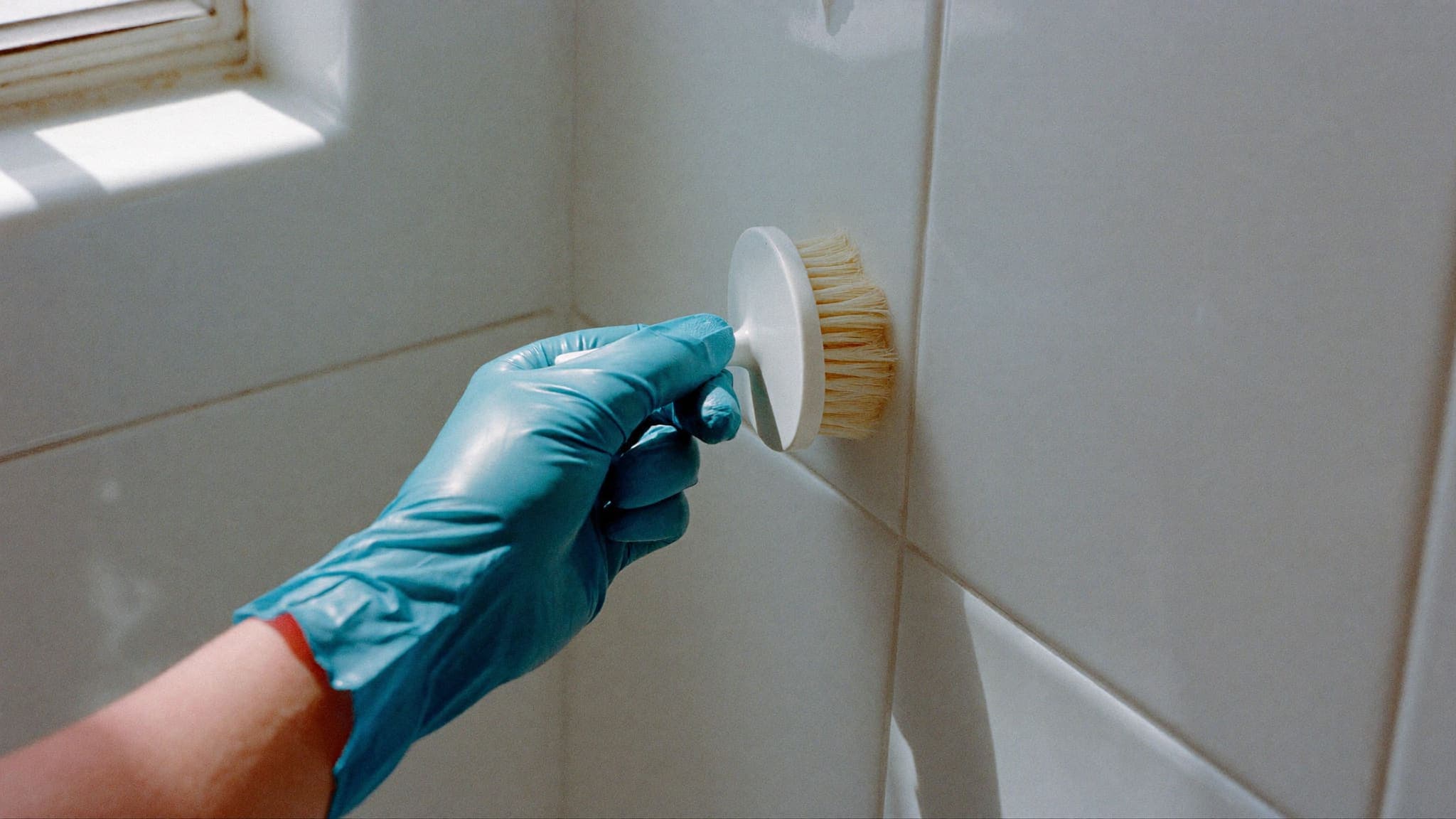
- ScrubApply the soapy water and scrub the grout lines with the brush, working from the edges of the spot inward.
- Rinsewith clean water.
- Dry completelywith a towel, then leave the fan running.
- Check after it driesStains that remain may be deep in the grout or caulk.
Mold or mildew?
| Mildew | Mold | |
|---|---|---|
| Looks like | Flat, grey or white powdery spots | Black, green or dark patches, sometimes fuzzy |
| Where | On the surface of grout and caulk | Can grow into porous grout and caulk |
| Cleaning | Wipes off with detergent | Needs scrubbing; stained caulk may need replacing |
Either way, the cleaning method below is the same.
What you need
- Rubber gloves and eye protection
- Dish soap or a bathroom detergent and warm water
- A stiff grout brush or old toothbrush
- A clean towel and a fan or open window
Safety: never mix cleaners
If you choose a bleach product, use it on its own. The CDC warns never to mix bleach with ammonia or any other cleaner, because it can release dangerous gases. Many glass cleaners contain ammonia, and some tile cleaners are acidic, so don't use them on the same surface without rinsing in between.
When cleaning isn't enough
- Stained caulk: caulk is soft and mold can grow into it. Cut it out, dry the joint fully and re-caulk. The EPA advises not to caulk or paint over mold.
- Crumbling grout: cracked grout holds water. Regrouting stops the cycle.
- Soft tiles or a musty smell you can't find: water may be behind the tiles. That's a job for a professional.
Keep it from coming back
Texas summers are humid, and bathrooms stay damp long after a shower. To keep mold away:
- Run the exhaust fan during showers and for a while after
- Squeegee the walls and glass after each shower
- Hang towels and bath mats to dry outside the shower
- Fix dripping taps and leaks quickly
- Reseal grout when water stops beading on it
- Book a deep clean a few times a year: grout and soap scum are part of most deep cleans
When to call a pro
The EPA suggests professional help when mold covers more than about 10 square feet, after water damage, or when it keeps coming back. A deep cleaning company can handle surface grout and soap scum; mold behind walls or tiles needs a mold remediation specialist.
Compare standard vs deep vs move-out cleaning to see which visit includes grout work, or find cleaners on our deep cleaning page.
Rather have a pro do it?
Get up to 3 free quotes from local cleaning businesses. No obligation.
Get free quotes